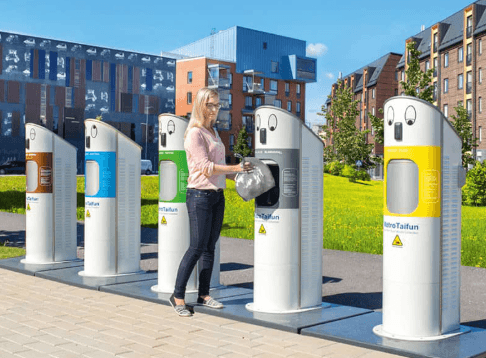
If you pass through any large airport, hospital or train station these days, something is remarkably different. The buttons, handles and panels that used to require a solid press or intentional touch are vanishing — supplanted by sensors that react to a wave, a proximity signal or just your presence. This is not aesthetic minimalism. It’s a conscious infrastructure transition informed by public health data and accessibility requirements and the evolution of smart city systems. Hands-free technology is now considered more than convenience, as many public spaces are adapting to touch-free options around the world.
Hygiene and Public Safety
The hygiene hypothesis is supported by years of epidemiological studies. High-contact surfaces in busy public places — such as crosswalk buttons, elevator buttons, door-opening plates — these are some of the most perpetually dirtied areas you can find in the public world. Research across transit networks in Europe and North America repeatedly point to these as hot spots for the spread of both respiratory and intestinal diseases.
The response from infrastructure designers has been utilitarian and quantifiable. The point of transmission is eliminated by replacing mechanical hardware with touchless options. A contactless push button, for instance, signals the intention of the pedestrian through either proximity or infra-red detection – not physical contact necessary, no surface contamination possible.
By 2026, a number of national health bodies have officially adopted touchless hardware requirements as part of public infrastructure standards, indicating a lasting change, and not just the temporary response of a pandemic.
Technology in Urban Areas
Investment in smart cities is changing how urban infrastructure is planned, purchased and serviced. City officials no longer are building dumb systems — they’re rolling out connected networks in which hardware streams data upward to management platforms and dynamically responds to conditions in the real world.
Touchless controls are a natural fit within this paradigm. Today’s sensor-activated units are often network-connected, recording activation statistics that can assist transit planners and traffic engineers in making pedestrian signal timing more efficient, in pinpointing congested areas of use and in planning maintenance in advance. In cities such as Amsterdam, Seoul, and San Francisco, this fusion of data is already industry standard for new pedestrian infrastructure projects.
The hardware has also come a long way. Early touch-free whisk systems were costly, they didn’t work well in wet or brightly-lit conditions, and they were hard to retrofit. Next-generation systems overcome all three barriers, enabling broad deployment at the city scale, at a cost competitive with traditional mechanical alternatives.
User Experience Improvements
Apart from hygiene and data utility factors, touchless tech provides a significantly enhanced experience for the users of public areas. The easiest group to identify who comes out ahead is the disabled — specifically those with limited mobility or grip strength, for whom physical push buttons are a serious obstacle. Handsfree operation is consistent with universal design principles that city planners are increasingly mandated to adhere to by recent accessibility laws in the US, EU, and UK. A system that serves all users without need for adaptation or special provisions is just better infrastructure. Wait time is a further enhancement. Sophisticated sensing systems are inherently faster than mechanical ones and do not wear out, so the 1000th actuation of the day is identical to the first. This matters for consistency in a highly trafficked setting where you simply can’t afford to not have it work.
Future Possibilities
The path of touchless technology is towards further integration of city systems. Gesture recognition, voice-based triggers and pairing with wearable devices, are all under active development or in initial deployment stages by 2026. At best, the contactless push button of today will become one input node within a greater, AI-responsive pedestrian management system within the next decade.
The cities that are spending the money to lay down this infrastructure now are building compatibility into the very foundations of their cities — allowing them to plug in next-gen capabilities without full-cost replacement.
See also: How to Develop a Growth Mindset
Conclusion
When technology provides a real and reliable solution to a real problem at scale, public spaces adopt it. Touchless systems now meet that bar. They enhance hygiene outcomes, increase accessibility, decrease maintenance burden, and seamlessly connect with the smart city systems that are shaping the future of urbanization in 2026 and onwards. The move away from physical touch points is not a trend—it is the new minimum standard for design in public infrastructure.