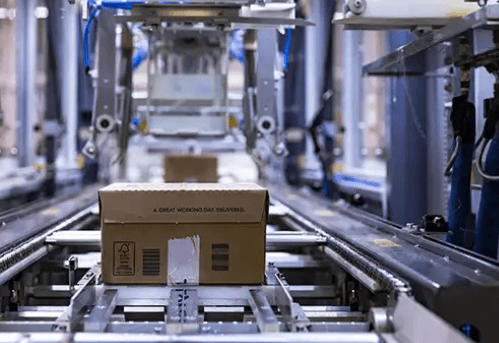
Manufacturing capital investment decisions are seldom made in a vacuum . They are a response to competitive pressure and customer demand, and are calculated based on operational costs. Across sectors — including nutraceuticals, household products, and medical devices — one investment type is regularly showing up near the top of the production cost budget in 2026: automated packaging equipment. The motives are coalescing from all sides at once, and for those businesses still on the fence, the margin for safe procrastination is getting quite thin.
Rising Market Demand
#Humanized output
1. Consumer demands for product display, shelf-ready packaging and delivery integrity have been continuously increasing over the last 10 years. Retailers have also become stricter with the specifications for carton size, labeling location, and the quality of the seal – all of which are difficult for manual lines to consistently meet at high volumes.
E-commerce expansion has introduced another level of complexity. Goods that once moved directly from warehouse shelf to retail display now pass through fulfillment centers, last-mile delivery networks, and consumer hands—each a potential packaging failure point. The margin of error for damage or misaligned labelling and drink containers has essentially dropped to zero in countries where one negative experience with unwrapping a product leads to a public review.
Simultaneously, supply chain unpredictability has increased the value of predictable production capacity. Companies that can quickly ramp up production to meet a sudden increase in demand — without scrambling for seasonal workers — are at a real competitive advantage, compared to those that can’t.
Benefits of Packaging Automation
The business case for automated packaging revolves around three closely linked advantages: speed, predictability, and compatibility. With a modern Cartoning Machine all these can be achieved at the same time, in a speed that no man team can come close to, while keeping the output always with the same quality throughout the whole production run. Predictability is especially important in regulated industries. Pharmaceutical and medical device producers must contend with documentation and presentation standards where variability of packaging isn’t just a quality concern — it’s a risk of noncompliance. Automated solutions remove the human variability that introduces that risk and provides auditable output on every run.
Compatibility with larger production systems is now considered a basic requirement, rather than a luxury. Modern auto pack machines can integrate to upstream filling line and downstream warehouse management system to run in a synchronized pace to minimize handling and maximize equipment util.
Cost Savings and Productivity
Saving on labor costs is the most obvious return on investment in packaging automation, but it has rarely been the greatest over a full equipment lifecycle. Diminished material waste, lower rates of rework, fewer compliance incidents, and less unplanned downtime cumulatively produce savings that more than compensate for the direct labor cost reductions within the first couple of years of operation.
Productivity improvements build upon each other over time in ways that are difficult to forecast before deployment, but become obvious once in the field. The introduction of a predictable, automated process to replace a variable manual one has a rippling effect—resulting in more predictable runs at the whole production line level, improving utilization of upstream equipment, enhancing predictability of planning, and eliminating management overhead associated with variability in packaging.
Future Technology Trends
By 2026, the packaging automation technology environment is projected to be well beyond simple mechanization. Applications of That were designed with artificial intelligence are now performing Predictive Maintenance, Production Scheduling Optimization and Live Quality Control – roles that would otherwise be occupied by whole teams of engineers.
Sustainability engineering is now a routine design parameter. New Generation Cartoning Machine SolutionsNew generation Cartoning Machine platforms are developed to work with lightweight, recycled and compostable packaging materials – an underpinning that corresponds with the regulatory path and consumer brand purchasing criteria for further minimization of environmental impact.
Modular equipment design is another significant innovation. Companies can now purchase scalable solutions that grow incrementally with production — significantly reducing the upfront investment barrier that often made automation cost-prohibitive for mid-market manufacturers.
See also: Building a Career in Tech
Conclusion
The business case for automated packaging machinery has never been stronger or more widely relevant. Increasing standards of the market, pressure from the labour market and the development of technology have together resulted into that every company – no matter the size of production – can now choose to invest in automation. They’re buying operational capabilities that will set the terms of competition for the next decade.